
Most unplanned chemical pump shutdowns are not sudden events. Noise changes first, then temperature, then vibration, then flow. A structured approach that works backwards from symptoms is far more valuable than simply replacing parts. This guide covers four high-frequency failure families and how to distinguish them.
1. Cavitation: the most misdiagnosed failure
Symptoms: a crackling noise like gravel passing through the pump, fluctuating discharge pressure and flow, honeycomb pitting on the impeller blade inlet, and shortened bearing and seal life.
Root cause: NPSHa falling below NPSHr, or low suction level, elevated fluid temperature, excessive suction-line losses, a clogged strainer or air in-leakage.
Check in this order: suction valve position and strainer differential pressure → recalculate NPSHa at the actual level and temperature → inspect for suction leaks and gasket condition → assess prolonged operation far from the duty point.
Remedies: raise the suction level, lower the pump, enlarge the suction line, reduce bends and valves, lower fluid temperature, or fit an inducer / select a lower-NPSHr design.
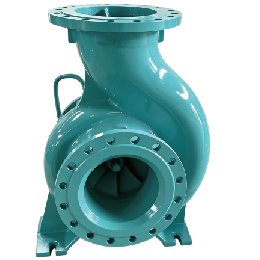
2. Leakage and seal failure
Symptoms: dripping or spraying at the seal, abnormal seal chamber temperature, changes in barrier fluid pressure or level, odour or crystal build-up.
Common causes: dry running (interrupted flush, pump running empty), face wear or thermal cracking, O-ring swelling or ageing from incompatibility, spring fouling, shaft runout or misalignment, and abrasive wear from solids.
Diagnostic cues: a steady small drip usually points to faces or secondary seals; leakage only at start/stop suggests compression or installation; a sudden major leak requires immediate shutdown under the hazardous-fluid response plan.
Remedies: verify that the API 682 flush plan matches the actual service, restore flush flow and pressure, correct alignment, and maintain seals and wear parts on running hours rather than a fixed calendar.
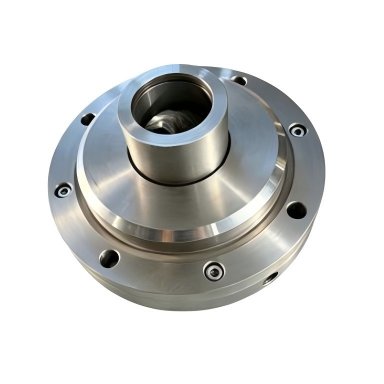
3. Vibration and bearing temperature
Symptoms: rising vibration severity (assess against ISO 10816 / ISO 20816), elevated bearing temperature, loose anchor bolts, coupling noise.
Read the frequency: dominant 1× running speed usually means unbalance (impeller wear, scaling, lost balance); 2× suggests misalignment; high-frequency energy and impacts point to bearing damage or cavitation; low-frequency whirl relates to foundation stiffness or pipe strain.
Remedies: check the foundation and pipe supports, re-align, inspect the impeller for wear and deposits and rebalance, maintain lubricant quality and level, and avoid extended operation below minimum continuous flow, which increases internal recirculation and radial load.
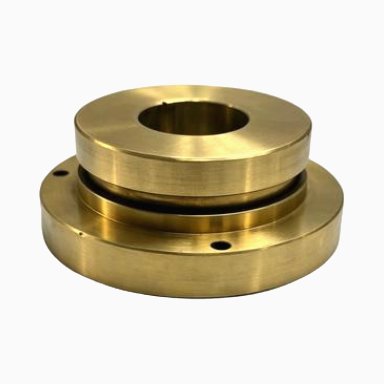
4. Corrosion, wear and blockage
Symptoms: gradual loss of flow and head, changing motor current, wall thinning, scaling or crystal deposits in the flow passage, and characteristic wash-out grooves on impellers and liners in slurry service.
Diagnostic cues: gradual performance loss suggests general corrosion or scaling; localised perforation suggests pitting or crevice corrosion; intermittent fluctuation suggests blockage or entrained gas.
Remedies: re-verify material against actual concentration and temperature (especially chlorides), control velocity, add filtration and flushing, and provide heat tracing plus shutdown displacement procedures for crystallising fluids.
5. Turn diagnostics into a system
Establish a baseline and trend it for critical machines: discharge pressure, flow, current, bearing temperature, vibration velocity (RMS) and seal flush status, with alarm thresholds and condition-based rather than calendar-based maintenance. For spares, prioritise mechanical seals, O-rings, impeller wear rings, bearings and diaphragms to shorten downtime.
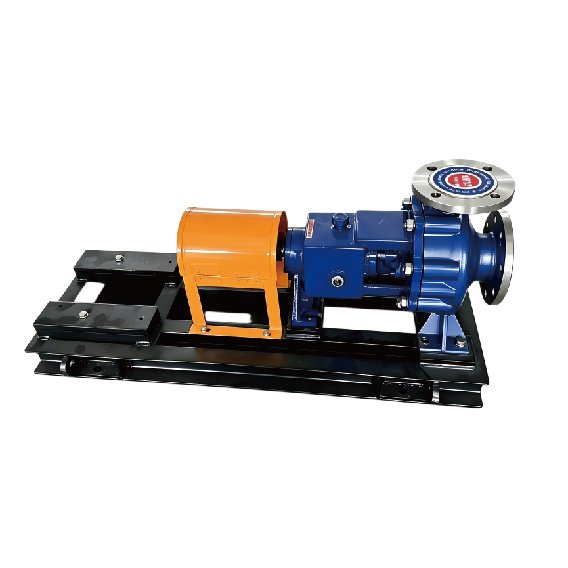
6. Inspection and spare-part support from GiantRoc
GiantRoc’s inspection resources include a Schenck dynamic balancing machine, a Hexagon CMM, an optical spectrometer, a 3D scanner and a closed-loop pump test bench. We can re-measure dimensions, verify material and rebalance failed impellers, casings, shafts and seal components, and support reverse engineering and custom machining so critical spares can be restored without waiting for a full unit replacement.
If you have a failed component to analyse or reproduce, send us photos together with the operating conditions.
General maintenance guidance; always follow site safety procedures and the equipment manufacturer’s manual.