
When the pumped fluid is highly toxic, corrosive, flammable, explosive, expensive, or simply cannot be released into the environment, the small permitted leakage of a conventional mechanical seal becomes unacceptable. A canned motor pump integrates the motor and pump into one unit with no dynamic seal, achieving zero leakage by design — a key asset in chemical, petrochemical and fine chemical plants.
1. Why it cannot leak
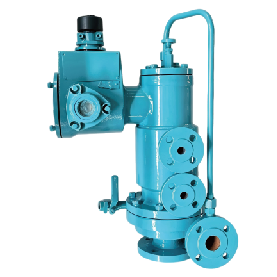
The impeller and motor rotor share a shaft inside a single pressure boundary formed by the casing and a non-magnetic corrosion-resistant containment shell. The stator sits outside the shell while the rotor runs immersed in the pumped fluid. Only static seals (O-rings, gaskets) remain; no rotating shaft penetrates the pressure boundary, so there is no leakage path. A circulation loop routes a portion of the fluid through the motor cavity to lubricate the bearings and remove motor heat.
2. Typical services
Hazardous fluids: chlorine derivatives, phosgene, HF, liquid ammonia, aromatics and organic peroxides, where any release has severe consequences.
Valuable or high-purity fluids: avoiding product loss and dilution by seal flush fluid.
Vacuum or high-pressure systems: no air ingress at the seal chamber, suitable for negative-pressure feed and high-pressure circulation.
Sites without utilities: no external seal flush and, for many models, no cooling water.
Noise- and maintenance-sensitive areas: no coupling and no cooling fan, quiet operation, no alignment issues.
3. Know the limitations
Canned motor pumps are not universal. Because the bearings are lubricated by the pumped fluid, dry running and extended idle rotation are strictly prohibited. Fluids with solids, crystallising or polymerising tendencies, or very high viscosity can block the circulation loop and wear the bearings; filtration or a different pump type is usually required. Fluid temperature, vapour pressure and allowable motor temperature must be verified together. Since containment shell damage is costly to repair, bearing wear monitors (such as TRG indicators), motor cavity temperature and current protection are commonly fitted.
4. Selection and operating practice
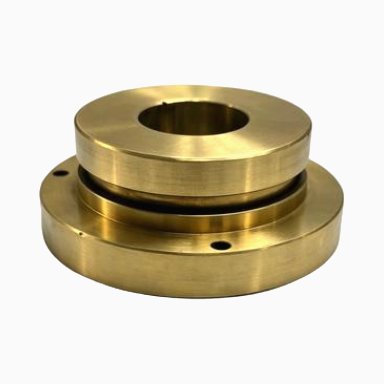
Beyond flow and head, specify lubricity, specific heat, thermal conductivity, solids content, vapour pressure and maximum temperature. These determine the circulation arrangement (internal or external), bearing material (commonly silicon carbide) and containment shell alloy (Hastelloy, titanium, etc.). Ensure a fully flooded suction to avoid gas binding, with a short suction line and minimal bends. In operation, trend bearing wear indication, motor current and vibration; check the circulation filter differential pressure regularly; and follow proper flushing and cleaning procedures after shutdown to prevent crystallisation.
5. Canned motor or magnetic drive?
Both are sealless. A canned motor pump is more compact, has no magnetic coupling, and tolerates higher pressure and temperature, but motor efficiency is slightly lower and repairs generally require a full unit return. A magnetic drive pump has an external containment shell and is easier to service, though eddy-current heating, demagnetisation risk and sensitivity to iron-containing fluids must be considered. Evaluate the fluid, pressure and temperature, maintenance capability and life-cycle cost, with reference to standards such as API 685.
6. GiantRoc’s component capability
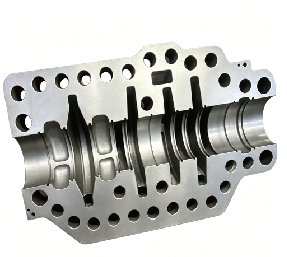
GiantRoc machines precision casings, impellers, containment shell components and bearing housings on 5-axis centres and CNC vertical lathes, with CMM, spectrometer and closed-loop pump test bench verification under ISO 9001 and GJB 9001 quality systems. Custom machining and reverse engineering from drawings or samples are available — contact us with your specifications.
General application guidance; final selection should use actual fluid data and the equipment manufacturer’s documentation.