
In a chemical plant, pumps are the heart of fluid movement. Unlike water supply duties, chemical process pumps handle corrosive, flammable, toxic, solids-laden or high-temperature fluids. A poor selection does not merely reduce efficiency — it can cause chronic maintenance or a release incident. This guide walks through a practical selection logic, starting with the fluid rather than the duty point.
1. Define the fluid first
Before flow and head, the medium must be specified in full: composition and concentration, pH, operating temperature range, density and viscosity, solids content and particle size, dissolved gas, tendency to crystallise or polymerise, and the toxicity or explosion hazard class. These parameters determine wetted materials, shaft sealing arrangement and pump type.
For example, dilute sulphuric or hydrochloric acid is often beyond the capability of standard 304 stainless steel; depending on concentration and temperature, 316L, duplex stainless, a nickel alloy, or a fluoropolymer-lined construction may be required. Catalyst slurries, by contrast, call for open impellers, wear-resistant materials and a flushable seal chamber rather than maximum hydraulic efficiency.
2. Duty point and NPSH margin
Define normal, minimum and maximum operating cases. A modest allowance is reasonable (roughly 5–10% on flow and around 5% on head), but excessive margins push the pump into continuous off-design operation. More importantly, available NPSH (NPSHa) must exceed required NPSH (NPSHr), with at least 0.5 m of margin generally recommended. High-temperature, volatile or low-suction-level services deserve particular care; an inducer, a lower installation elevation or a larger suction line may be needed.
3. Four pump types and where they belong
| Pump type | Typical chemical service | Key selection points |
|---|---|---|
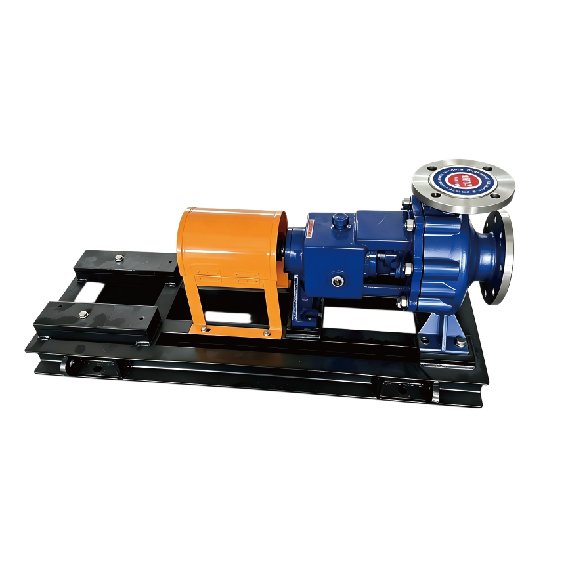
| Centrifugal | High flow, low-to-medium head, clean or lightly contaminated fluids; cooling water, solvents, acids and caustics | Select to ISO 2858 / API 610; keep the duty point inside the high-efficiency region |
| High-speed | Low flow, very high head; hydrocracker feed, light hydrocarbons, liquid ammonia, high-pressure injection | Inducer, gearbox lubrication and axial thrust balance |
| Canned motor | Highly toxic, flammable, explosive, valuable or zero-emission fluids | Sealless design; ensure bearing circulation, never run dry |
| Diaphragm | Aggressive corrosion, high viscosity, solids, or accurate chemical dosing | Diaphragm compatibility, pulsation dampener and back-pressure valve |
4. Sealing, standards and installation environment
The shaft seal is usually the weakest link. A single mechanical seal with an appropriate flush plan suits benign services; hazardous fluids generally call for dual or tandem seals with a barrier or buffer system (see API 682 flush plans). Also confirm the site conditions: hazardous-area classification, ingress protection, ambient temperature and humidity, indoor or outdoor installation, corrosive atmosphere, and the available power supply.
5. Manufacturing and inspection support from GiantRoc
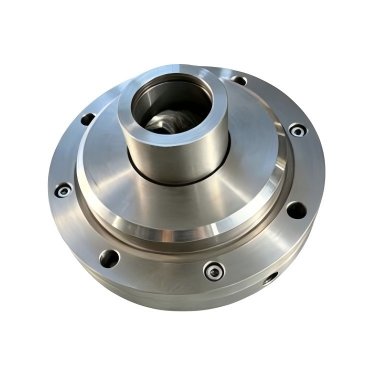
Henan GiantRoc Machinery Equipment Co., Ltd., founded in 2004, is a national high-tech enterprise specialising in pumps, fans and precision components, certified to ISO 9001, ISO 14001, ISO 45001 and GJB 9001. Our facilities include 5-axis machining centres, CNC vertical lathes, a Schenck dynamic balancing machine, a Hexagon coordinate measuring machine and a closed-loop pump test bench. These allow dimensional and performance verification of casings, impellers, diffusers and wear rings from raw material through finished part, with custom machining, reverse engineering and small-batch production available.
If you are selecting a pump for a specific duty, send us the fluid, temperature, flow/head and installation conditions — we are glad to review the material and configuration together.
This article shares general engineering practice. Final selection should be based on actual process data, applicable standards and the manufacturer’s technical documentation.